Crosby Small Batch






For generations, European noble hops have defined what great lager tastes like. Hallertau Mittelfrüh, Saaz, Tettnang, and Hersbrucker have earned their place in brewing history through the elegant floral, herbal, and spicy character they've contributed to countless world-class beers.
That legacy isn't going anywhere.
But the reality of brewing in 2026 looks very different than it did even a decade ago. Ingredient costs fluctuate with currency markets. Ocean freight remains unpredictable. Tariffs, geopolitical events, and supply chain disruptions can quickly turn a straightforward purchasing decision into a complicated business risk.
At the same time, brewers are being asked to do more with less. Margins are tighter, consumers expect continual innovation, and sustainability has become more than just a marketing message—it's increasingly part of how breweries evaluate their suppliers.
Against that backdrop, American noble hops have quietly become one of the most compelling opportunities in modern lager brewing. The conversation isn't about replacing European hops. It's about expanding the brewer's toolbox.
Classic Character, Practical Advantages
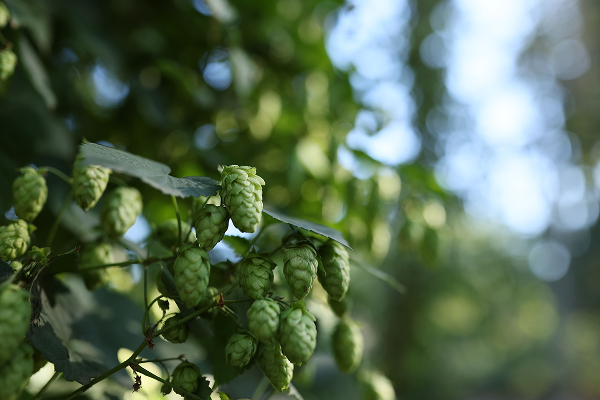
Many of today's domestic noble varieties were developed specifically to capture the refined aroma profiles that made European nobles famous while improving the characteristics that matter in the field and throughout the supply chain. USDA public breeding programs focused on creating varieties with better disease resistance, stronger yields, improved vigor, and greater adaptability to American growing conditions. The result is a family of hops that honors traditional lager character while offering practical advantages for today's breweries.
Those advantages begin long before the hops ever reach the kettle.
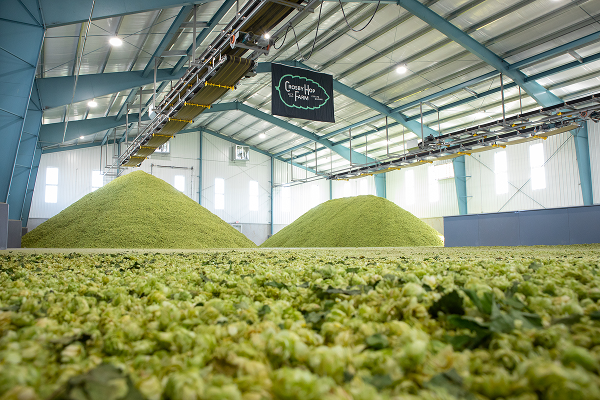
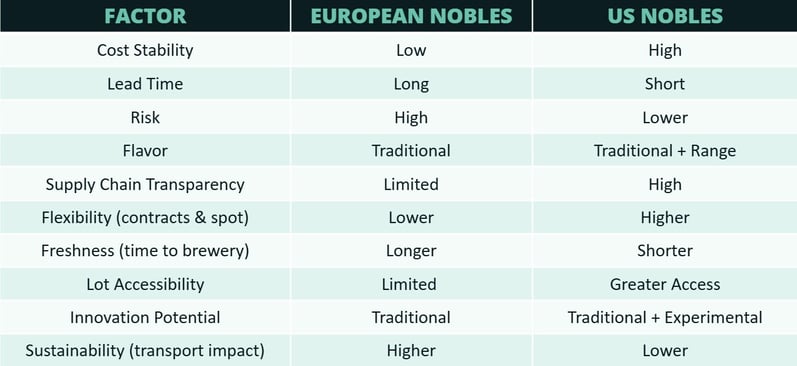
Sourcing domestically provides breweries with greater control over one of the most unpredictable parts of modern brewing: procurement. Instead of navigating exchange-rate swings, ocean freight costs, port congestion, and international logistics, brewers gain shorter lead times, more predictable pricing, greater lot transparency, and the flexibility to adjust purchasing throughout the year. Freshness also benefits from a shorter journey, reducing transit time and minimizing opportunities for cold-chain interruptions that can impact hop quality.
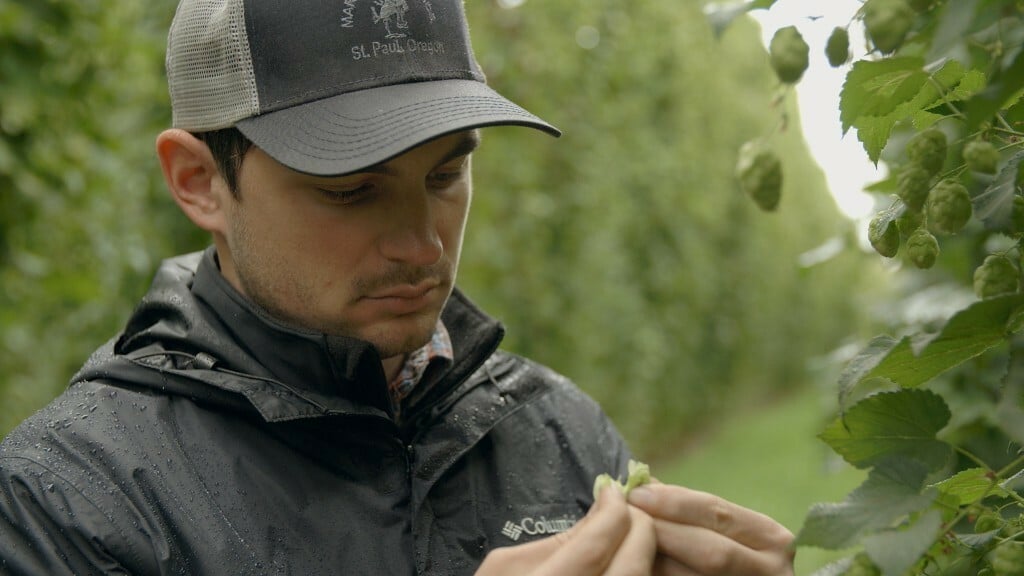
Domestic sourcing also creates opportunities that are difficult to replicate internationally. Brewers can participate in harvest, evaluate lots firsthand, build relationships with growers, and confidently select the lots that best match their needs.
A More Sustainable Supply Chain
Choosing hops grown closer to home naturally reduces transportation emissions, while supporting American hop farms and the public breeding programs that continue to develop improved varieties for the future. Many domestic noble hops were bred not only for exceptional brewing performance but also for stronger agronomics, requiring fewer inputs while delivering higher yields and improved disease resistance. Those are advantages that benefit growers, brewers, and the long-term resilience of the supply chain alike.
Room to Innovate
American noble hops give brewers room to evolve traditional lager profiles without abandoning them. They preserve the floral, herbal, spicy elegance that defines classic European brewing while introducing subtle layers of citrus, fruit, or floral complexity that can help a beer stand apart in an increasingly crowded market. Whether brewing a traditional pilsner, a modern helles, a hop-forward lager, or an entirely new interpretation of the style, domestic nobles allow brewers to create beers that feel both familiar and distinctive.
Each variety brings its own personality to the brewhouse.
Nobles Comparison Chart
The Crosby Crispy Series: A Curated Collection of Northwest Nobles
Our Crosby Crispy Series brings together a curated portfolio of noble and noble-inspired aroma hops selected for their ability to produce elegant, balanced lagers. Many are grown in Oregon's Willamette Valley, where the region's cool maritime climate and long growing season help develop refined aroma profiles reminiscent of Europe's classic hop-growing regions. Whether you're recreating a traditional pilsner or exploring a modern interpretation, these varieties offer brewers a broad range of options while maintaining the restraint and balance that great lagers demand.
Developed by the USDA in 1983, Crystal was designed to recreate the refined character of Hallertau Mittelfrüh while thriving in American growing conditions. Floral, herbal, cedar, and gentle spice are complemented by a subtle citrus lift, creating a balanced hop that adds complexity without dominating the beer. Crystal is an excellent alternative or companion to Hallertau Mittelfrüh, Hersbrucker, Saphir, or Strisselspalt, and has become a trusted choice for breweries such as Allagash and Sierra Nevada.
Released in 1989, Mt. Hood builds on Hallertau heritage with improved vigor and yield. Its soft floral character, gentle herbal notes, mild spice, and clean bitterness make it particularly well suited for traditional lagers, Oktoberfests, and other malt-forward styles where balance is paramount.
Sterling represents a bridge between classic and contemporary. Inspired by Saaz but enhanced through American breeding, it offers traditional spicy and herbal qualities layered with bright lemon and orange citrus. The result is a hop that remains unmistakably lager-friendly while providing a bit more aromatic lift for modern interpretations of classic styles.
One of the foundational aroma hops of American craft brewing, Willamette traces its lineage back to English Fuggle. Herbal, earthy, floral, and lightly woody, it contributes depth and subtle complexity across a wide range of beer styles and remains an excellent choice for brewers looking to build nuanced aroma rather than bold intensity.
Often described as a "New World Noble," Adeena pairs classic herbal and spicy notes with delicate rose-like floral aromas and hints of citrus. Developed through the Latitude 46 breeding program from our supply chain partners at Roy Farms, it also brings outstanding agronomic performance, including strong disease resistance, drought tolerance, and excellent yields, making it as attractive in the field as it is in the brewhouse.
Vista demonstrates where noble-inspired breeding continues to evolve. Honeydew, pear, tropical fruit, sweet citrus, and green tea notes create an expressive yet refined profile that works beautifully in modern lagers and contemporary beer styles looking for a fresh take on traditional hop character.
Looking Ahead
For breweries interested in exploring domestic noble hops, the best approach is often the simplest: start small. Trial a single variety alongside your existing hop program, brew side-by-side comparisons, conduct blind tastings, and let the results guide your decisions. Many brewers discover that they don't have to choose between tradition and innovation, they can have both.
American noble hops prove that honoring tradition doesn't mean standing still. By combining the elegance of classic noble varieties with the reliability, flexibility, and resilience demanded by modern brewing, they give brewers the tools to build exceptional lagers for the next generation—without losing what made them timeless in the first place.